
Cost per Hire for Developers in Mexico: A Real JSConf Case Study
A real case: 3 senior developer hires at JSConf México for $25,000 all-in. $8,333 per hire, 67% below the agency benchmark.
What is the real cost per hire in Mexico for a senior developer, and how does it compare to the LinkedIn Recruiter or agency benchmark they have been using for years? The answer most teams have been operating on is wrong by a meaningful margin, and the gap matters at scale. Finance leaders and CFOs at US tech companies often ask the same question when reviewing LATAM hiring budgets.
As leader of a team who has been running tech event activations across Mexico for US companies for years, here is the most honest answer I can give. The cost per hire in Mexico depends entirely on the channel you choose, and the gap between channels is larger than most teams expect.
The benchmark most US teams are working from
Most US teams budget developer hiring in Mexico through two channels. The first is LinkedIn Recruiter seats plus the recruiter time behind them. The second is the agency placement fee, which in Mexico runs between $20,000 and $30,000 per senior hire, depending on seniority and stack.
The working assumption, then, is that a senior developer in Mexico costs somewhere in that range per closed hire. That math is not wrong. It is incomplete, because it ignores a third channel that performs materially better when designed correctly.
The third channel: event-based hiring with measurement
The third channel is what we build at TechBrander. Tech event activations with built-in measurement, community partnerships, and a follow-up system that connects every booth interaction to a downstream hire.
Most US teams do not consider this a real channel, because the historical performance of generic event sponsorships has been poor. By contrast, when an event activation is designed as a hiring funnel rather than as brand awareness, the cost per hire in Mexico drops significantly. The math only works under three conditions: the right event, the right activation design, and a real measurement system from day one.
The Mario Kart case at JSConf México
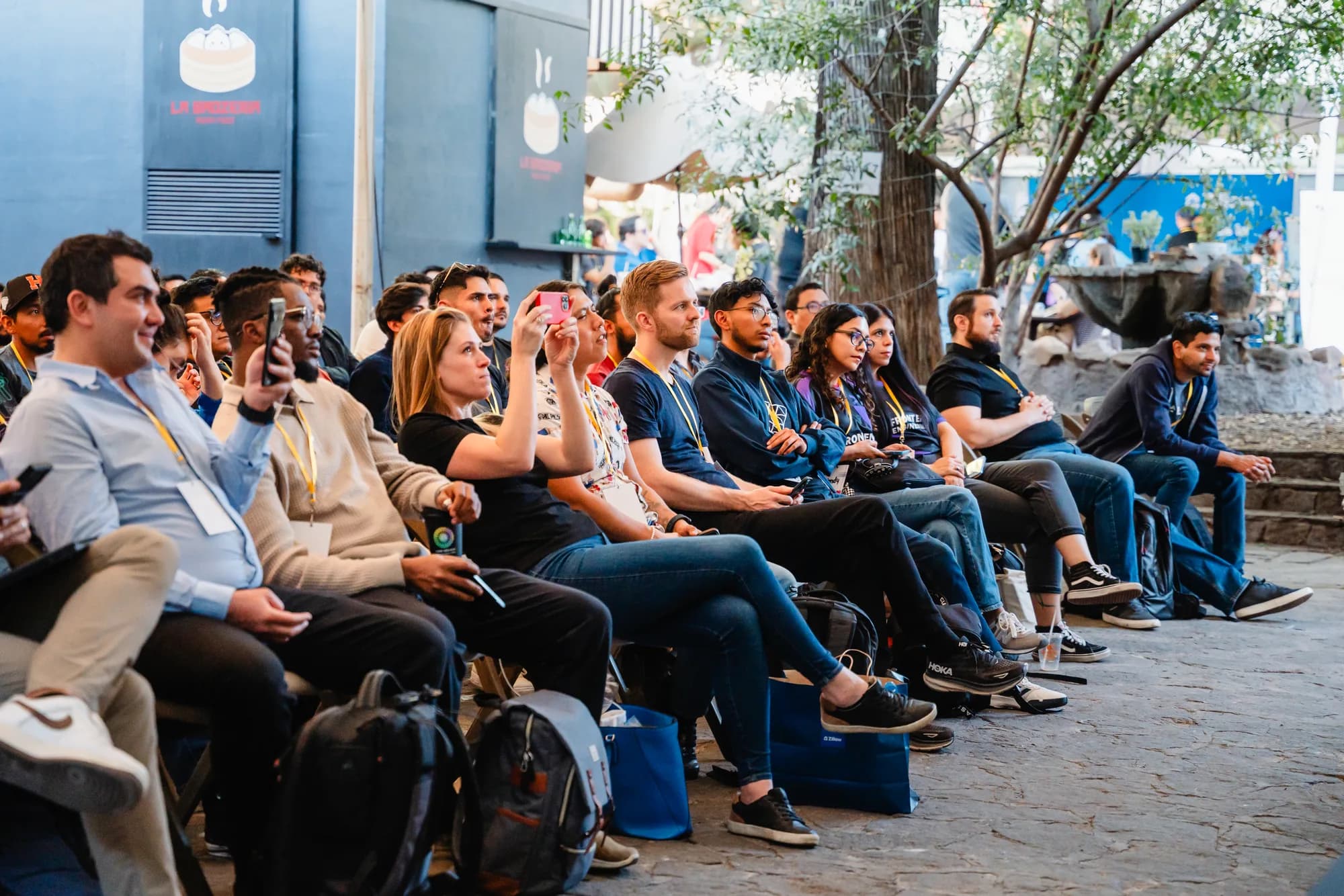
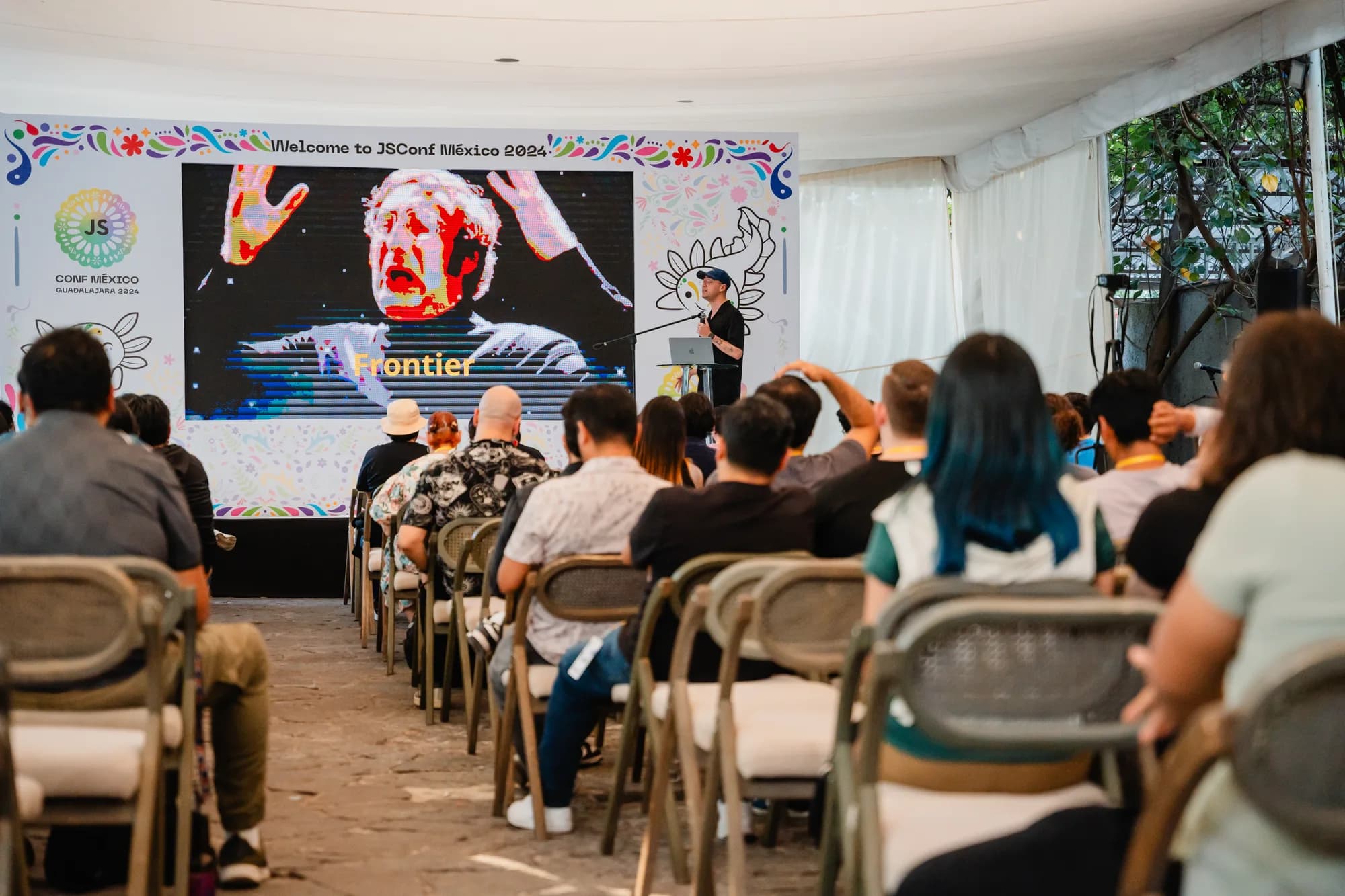
A US tech company asked us to design and run a hiring activation at JSConf México 2024 with one goal: hire three senior backend engineers. Over two days in Guadalajara, the conference brought together 350 developers, and 55% of them were senior profiles, according to the organizers. Mexico has roughly 390,000 software developers and analysts (Data México, Q1 2026). The talent is there. The challenge is reaching it efficiently.
The numbers
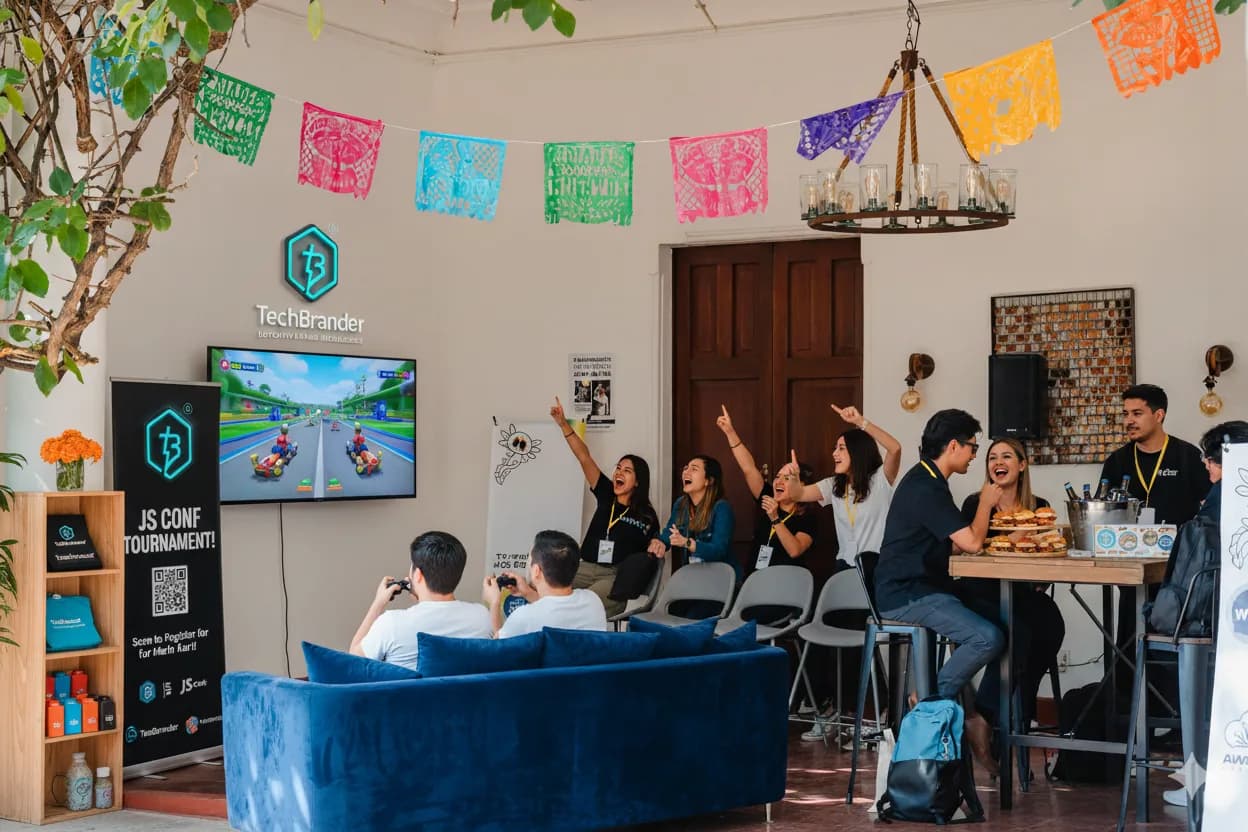
Over the two days, 85 developers registered for the tournament. Every registration went through a custom event page where they could watch a 15-second EVP video, browse open roles, book a 20-minute screening with recruiters at the booth, connect with the team, or sign up for the next meetup. Every click was tracked.
The result: 15 technical screenings booked on site, with real calendar invites, and 3 senior hires, all engineers with distributed systems experience.
Total investment: $25,000
- Diamond sponsorship: $11,000
- Mario Kart activation (two-day setup, consoles and screens, lounge, bar service, branding, prizes, photo and video): $9,000
- Travel and logistics for a 10-person team: $5,000
The cost per hire math
Three senior hires through the traditional agency channel: 3 × $25,000 = $75,000. Three senior hires through this activation: $25,000 total, or $8,333 per hire.
That is a 67% reduction in cost per hire and $50,000 saved for the same outcome. The figure includes every cost: sponsorship, activation, travel and logistics.
What made it work
A common pushback from US finance teams is that the eight thousand dollar cost per hire in Mexico looks too good to be true. Specifically, they assume it relies on luck, or a one-time stroke of strong candidates or favorable conditions.
In our experience, the number is replicable when three conditions hold. First, the event has a genuine concentration of the seniority profile the client is hiring for. Second, the activation is designed to filter for that profile. Not to attract maximum traffic. Third, the measurement system is built into the registration flow from day one, not added after the fact.
By contrast, the same investment without those three conditions typically produces brand awareness without measurable pipeline. The variable is design, not budget.
What this means for your hiring math
One case is not a benchmark. What it shows is that event-based hiring can beat agency and LinkedIn channels on cost when three conditions hold: the event concentrates the seniority you need, the activation filters for that profile instead of chasing attendance, and measurement is built into registration from day one. In this case, that meant $8,333 per senior hire.
Planning developer hiring in Mexico or Latin America? Book a 30-minute strategy call or visit techbrander.mx.