
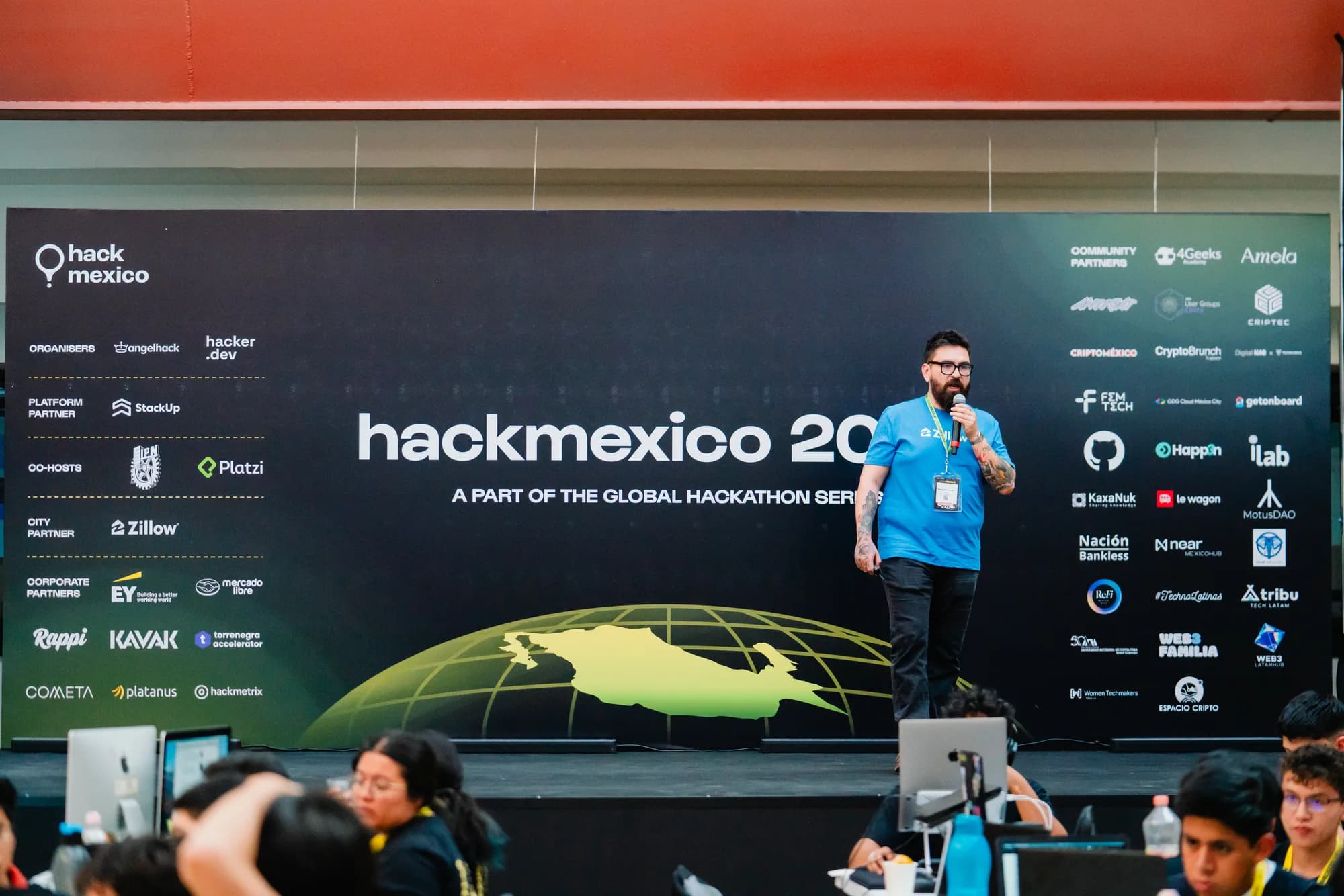
How to Organize a Hackathon in Mexico: A Step-by-Step Guide
A step-by-step guide to organizing a hackathon in Mexico: how to design the challenge, partner with communities, and measure outcomes and ROI.
Marketing and Talent teams at US tech companies are being asked to do more with less when it comes to tech events in Mexico. They are expected to build employer brand in LATAM, generate qualified pipeline from new geographies, and prove ROI on every dollar spent, with limited headcount and no extra budget. That is a hard expectation to carry alone.
The simplicity of the brief is exactly where most hackathons go wrong. However, a hackathon in Mexico can be one of the most effective hiring channels you will ever run, or one of the most expensive vanity exercises you will ever fund. The difference is rarely about budget. Almost always, it is about design choices made before the first email goes out.
As someone who has been organizing hackathons across Mexico for years, here is what I share with every team before they commit to a date. These are the four decisions that separate hackathons that hire from hackathons that just party, and they apply directly to how to organize a hackathon in Mexico that produces measurable outcomes.
Step 1: Define the outcome before the format
Often, the most common mistake is starting with "let's do a 48-hour hackathon" before deciding what success actually looks like.
A hackathon designed for product adoption looks nothing like one designed for senior hiring. Similarly, a hackathon designed for community goodwill looks nothing like one designed for brand awareness. As a result, each of these outcomes requires a different format, different challenge structure, different prizes, different judging criteria, and a different post-event follow-up.
If you cannot answer "what specific outcome justifies this budget" in one sentence, you are not ready to choose a format. You are ready to ask better questions. Most teams that come to us with a hackathon idea actually need a community meetup, a workshop series, or a developer experience consultation. The brief is rarely "run a hackathon." Instead, the brief is "we have a hiring or adoption problem we believe a hackathon will solve."
Step 2: The challenge design is the filter
This is the layer most teams underestimate. They over-invest in marketing the hackathon and under-invest in designing what participants will actually build.
Crucially, the challenge brief decides who participates. For instance, a challenge that says "build a Wordle clone" will attract students, junior developers, and anyone with a free weekend. By contrast, a challenge that says "solve a distributed systems edge case using our real production dataset" will attract senior engineers who find that problem interesting on a Friday night.
Same marketing budget. Completely different participant profile. The filter is built into the brief, not into the promotion.
The teams that hire from their hackathons design the challenge as the qualification gate. If the challenge is something a junior developer cannot complete, only senior developers register. If the dataset or technical context requires real experience, only people with that experience engage. The hackathon becomes a self-selecting talent funnel, where every registration is already filtered for seniority.
Step 3: Community partners are not vendors
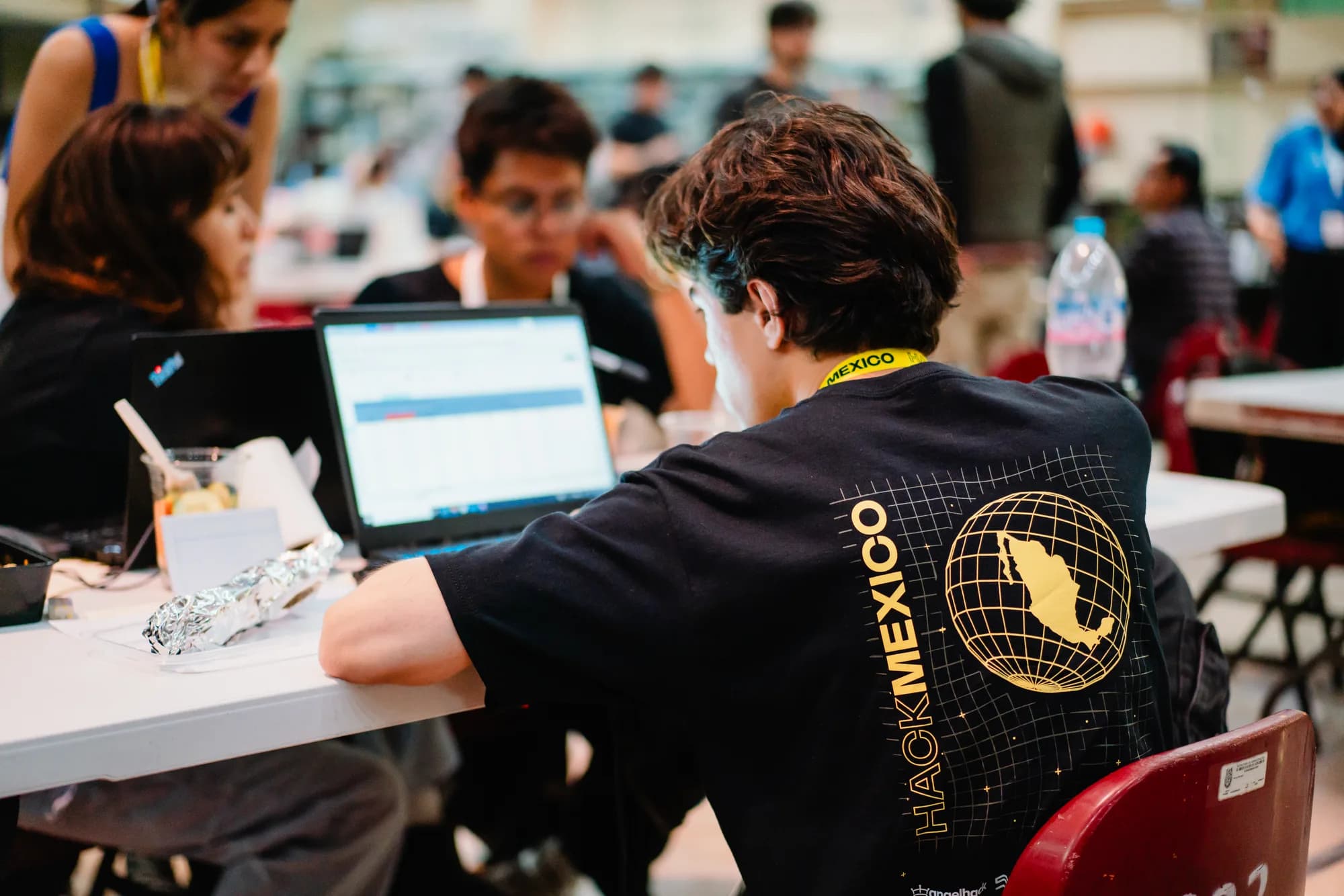
This is the most overlooked element of organizing a hackathon in Mexico, and the one that decides whether senior developers will show up or politely ignore your event.
Mexican developer communities operate on trust networks built over years: Posadev, JSConf México, GDG Guadalajara, GDL JUG, Mobile Developer Group and GDL DevComms. These are not marketing channels. They are relationships between people who have shown up for each other consistently. When a community organizer endorses a hackathon, the senior developers in that network actually consider attending. When a hackathon is promoted via cold ads or generic LinkedIn campaigns, those same senior developers scroll past.
The shortcut is to co-organize with a real community partner. Not sponsor them. Co-organize. The difference is in the operational and creative ownership of the event, and the trust that comes with it. A co-organized hackathon draws a more senior crowd than one promoted purely with paid distribution, and you can see the difference in the registration data within days.
Step 4: Measurement is the difference between a story and a strategy
Most hackathons are measured by registration count, social media impressions, and how good the photos look on Monday. However, none of these correlate with hiring outcomes.
The measurement that matters tracks participation depth. Specifically, how many teams actually formed. Also, how many submitted a working prototype. Most importantly, how many participants engaged in technical conversations with your engineering team. Beyond that, how many agreed to a screening within the next two weeks. Finally, how many of those resulted in offers within sixty days.
At TechBrander we design every hackathon with DEBS™ (Developer Experience Behavioral System). Every touchpoint is defined before the event, so the post-event report answers the only question your CFO cares about: what was the cost per qualified candidate, and how does it compare to your other hiring channels.
The benchmark to beat is your current cost per senior hire. In our cost per hire case study, a designed activation landed at USD 8,333 per hire against a USD 25,000 benchmark. A hackathon should be held to the same math.
How to organize a hackathon in Mexico: how we would measure it
Take a US tech company with a clear brief: hire two senior platform engineers. This is how we would set it up.
The design: co-organize with a community partner in Guadalajara, build the challenge around a real production infrastructure problem, and run the event over forty-eight hours with the company's engineering team on site.
The funnel, defined before the first email goes out: registrations and the share that is senior, teams formed, working prototypes submitted, technical conversations with the company's engineers, screenings booked during the event, screenings completed within two weeks, and offers and hires within sixty days.
The cost per hire: total investment (production, community partnership, prizes, travel and team time) divided by hires, compared against the company's current benchmark. If the hackathon cannot beat that number, it should not run again in the same format.
The lesson is the same lesson that applies to every event in this market. The design upstream decides the outcome downstream.
What to do next
If you are scoping how to organize a hackathon in Mexico for the coming quarter, four questions are worth answering before any vendor outreach. What specific outcome justifies the budget. What challenge design would filter for your target participant profile. Which community partner fits your goal. And how you will measure depth, not just volume.
That is the work TechBrander is built around: community partnerships that developers trust, challenges designed as a filter, and measurement from first touchpoint to closed hire.
If you are planning a hackathon for 2027, book a call or visit techbrander.mx.