

Experiential Marketing for Tech Companies: How to Design It and Measure It
Experiential marketing for tech companies works when psychology, engagement and measurement work together. A three-layer framework and a real JSConf México case.
Marketing leads at US tech companies are under quiet pressure these days. They are asked to make every event memorable, produce buzz on LinkedIn, and somehow generate hiring pipeline from activations that the rest of the company measures against revenue. With no playbook. And often, with a smaller budget than last year.
It is hard to design an experience worth remembering when the only success metric you are given is the number of people who took a selfie at your booth.
As someone who has been producing tech events in Mexico for US companies for years, here is the reframe I share with every team before they design their next activation. Experiential marketing for tech companies is not entertainment. It is filtering and measurement, dressed in design.
The teams that turn events into pipeline understand three layers. The teams that do not, end up with great photos and an empty pipeline review.
Layer one: the psychology of the experience
The first mistake most companies make is designing the activation for maximum foot traffic. Bright colors, free swag, easy interactions, a line forming at the booth. It feels like a win. It is not.
A busy booth is often a signal that you are attracting the wrong audience. The right audience does the opposite of standing in line. Senior engineers scan a room for booths that look serious, peer-led, and technically credible. If your activation looks like a giveaway stand, they will walk past you on principle.
The psychology that actually works with developer audiences is specificity and gamification. A live coding challenge with non-trivial system design questions. A whiteboard session led by your principal engineer. A demo of a real technical tradeoff your team is debating internally. These activations attract the right people. The people they attract are the ones you came to meet.
The experience itself does the funneling & qualification work.
Layer two: who shows up versus who stays
The second layer is about understanding that attracting attention and earning engagement are two different things. Most activations only solve for the first.
Anyone can pull a senior developer toward a booth with a free drink. The harder design question is what makes them stay for twenty minutes, ask real questions, and leave their email in a system that knows the difference between a casual scan and a real conversation.
What earns that twenty minutes is rarely entertainment. It is the perception that what you built was made for someone like them. A challenge worth their time. A conversation with a peer who understands their work. A demo that respects their existing skill level instead of explaining things they already know.
Tech audiences are particularly allergic to corporate spin. They will detect a recruiter pitch within thirty seconds and politely disengage. The activations that earn real engagement use engineers as the front line of conversation, not recruiters. Recruiters are essential later in the funnel. At the moment of first contact, the developer wants to talk to another developer.
Layer three: the measurement that makes it defensible
The third layer is what separates experiential marketing for tech companies from experiential marketing for any other industry. Tech buyers want numbers. Tech CFOs do not care that your activation was memorable. They want to know what it generated and at what cost.
Without a measurement system, your post-event report is a slide of attendee photos. With one, it answers the question your CFO is actually asking: how much qualified pipeline did this generate, and how does the cost per qualified candidate compare to LinkedIn Recruiter or to an agency placement.
A real measurement system captures every meaningful touchpoint of the experience. The walk-up to the booth. The activation completion. The technical screening booked. The post-event newsletter subscription. The LinkedIn connection with your engineering team. Each one is a signal of intent that, taken together, lets you score qualified candidates with the same rigor your sales team scores leads.
At TechBrander we built this system for ourselves and named it DEBS, the Developer Experience Behavioral System. The point is not the name. The point is that without this layer, your experiential marketing is theater. Beautiful theater, but expensive theater.
What this looks like in practice
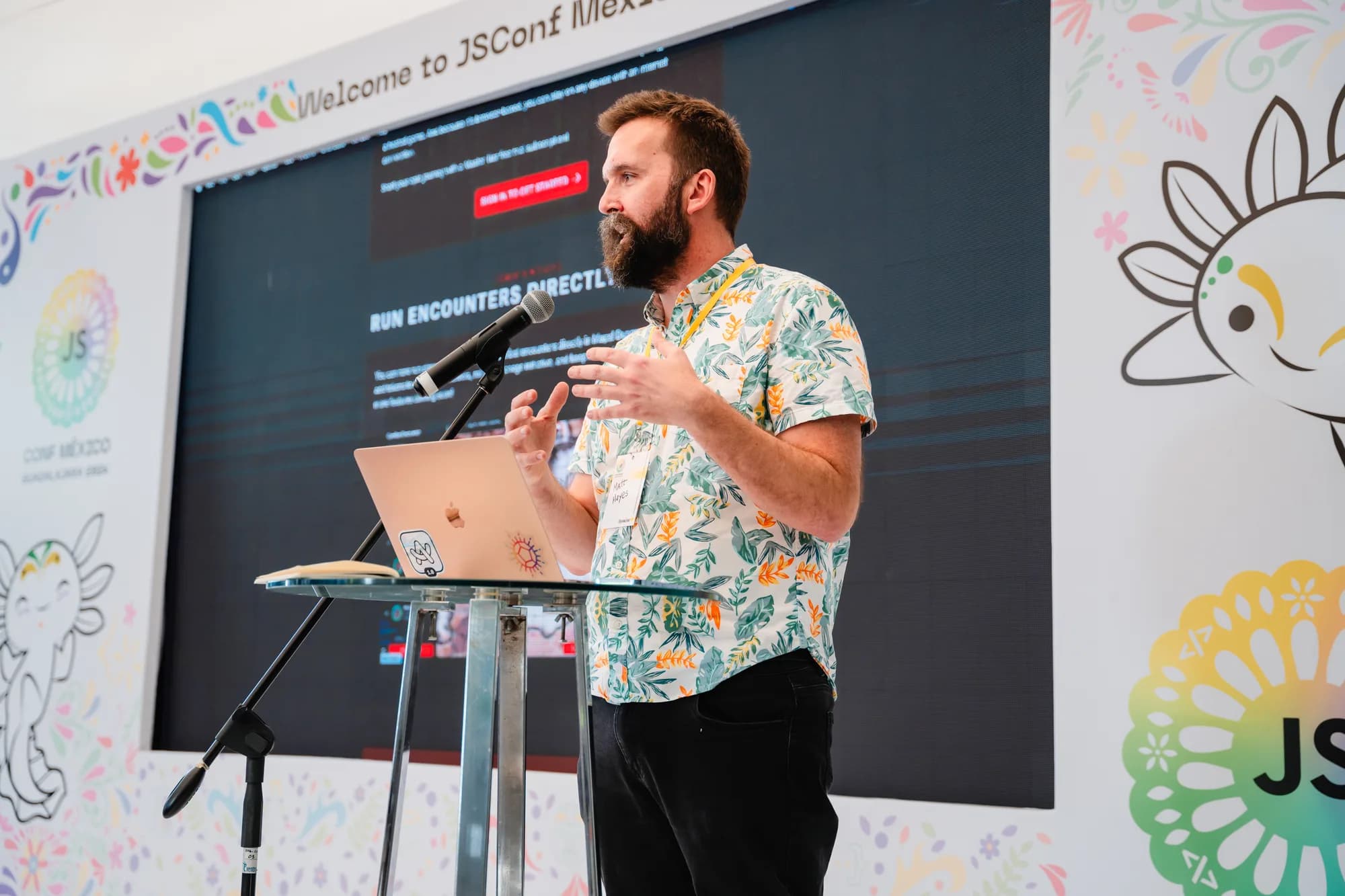
At JSConf México 2024, we designed and ran a hiring activation for a US tech company: a Mario Kart tournament with filtered registration and on-site technical screenings. Every registration went through a custom page where developers declared their intent: book a screening, browse open roles, connect with the team or just play.
The result: 85 tournament registrations, 15 technical screenings booked on site and 3 senior hires. Total investment was $25,000 all-in, or $8,333 per hire against a $25,000 agency benchmark per senior hire, 67% lower. Read the full cost breakdown.

Closing thoughts
Three layers. Psychology, audience filter, measurement. None of them are optional. Each one corrects a different failure mode.
If you are designing experiential marketing for your tech company, the question to keep in mind is not what activation will be most fun. It is what activation will filter for the audience you actually need and produce a report your CFO can defend.
That is what we build at TechBrander for tech companies showing up in Mexico and Latin America. Follow TechBrander on LinkedIn for the next cases.
The next article goes deeper on how to brief an experiential marketing agency without losing the strategy in the process. What is the most memorable experiential marketing activation you have seen from a tech brand? The next article will go deeper on how to brief an experiential marketing agency without losing the strategy in the process.
Design your next developer experience
Experiential marketing is not a booth. It is a system: an experience developers choose to join, and a measurement layer that tells you what happened next. If you are planning activations at developer events in Mexico or Latin America, book a 30-minute strategy call or visit techbrander.mx.